
Hamblen Projected Versus Actual Release
A projected, scheduled, or eligibility date is not the same as physical release. It can mark a calculation point, an expected end, or the first time a legal decision becomes possible. Actual release is the recorded event when one custodian ends the booking or sentence status. Even then, the person may transfer to another authority instead of entering the community.
For a Hamblen County jail booking, a populated iSOMS Release Date and time confirms that HCSO ended that booking. The field does not state the authority, conditions, or destination. The retained discharge packet supplies those facts. For a state offender, FOIL sentence dates describe the TDOC sentence and parole framework. The final release authorization documents the real state event. A pretrial person has no sentence-based release calculation because the case has not produced a final sentence.
Scheduled versus actual: A date can show eligibility or sentence expiration without proving that the person walked out, entered parole, or cleared every hold.
- Release Eligibility Date
- The earliest statutory eligibility or consideration point calculated for the governing sentence rules.
- Sentence End Date
- The calculated end of the sentence, which is separate from an earlier parole release.
- Detainer
- A request or hold from another authority that may cause transfer when the first custody ends.
- Discharge
- The formal end of a custody or supervision relationship under official authority.
Classify Hamblen Release-Date Custody
The correct source follows the custodian. A person held before trial at the Hamblen County Sheriff’s Office and Detention Center needs the court and jail record. A misdemeanor sentence usually stays in the local judgment and jail-credit framework. A felony offender sentenced to TDOC may appear in FOIL even while housed in a county jail. A state prisoner uses TDOC sentence information. Federal and immigration dates belong to their own systems.
| Situation | Best date source | Key limit |
|---|---|---|
| Hamblen pretrial detention | Bond and release orders, clerk docket, HCSO record | No sentence-based fixed date |
| Local misdemeanor sentence | Judgment, jail credit, HCSO discharge record | TDOC felony rules may not control |
| State felony in county jail | TDOC County Jail Sentence Information plus local custody record | County roster departure may be a transfer |
| TDOC prisoner | FOIL, Sentence Information, release authorization | RED is not actual release |
| Federal or ICE custody | BOP, federal docket, or ICE channel | Tennessee dates do not govern that custody |
Tenn. Code Ann. § 41-21-1006 assigns TDOC responsibility for calculating sentence expiration and earliest release dates for felony offenders sentenced to TDOC and felony offenders sentenced to county jail or workhouse for one year or more. That rule explains why TDOC sentence information can matter for a state-sentenced person still housed locally. HCSO still owns the actual county custody record.
Find Hamblen Projected Release Dates
Begin with exact identity and the case type. Names can repeat, and one person can have more than one booking or sentence. A TDOC ID or State ID is stronger than a name alone. For a county case, use the booking dates and court case number when known. Never estimate a release date by subtracting a percentage from a sentence without the official offense, offense date, credits, jail credit, and judgment.
- Decide whether the person is pretrial, locally sentenced, state-sentenced, or in another custody system.
- For a state felony, open TDOC FOIL and search by TDOC ID, State ID, or exact name.
- Match date of birth, physical details, identifiers, active sentences, and assigned location before reading the dates.
- Read Release Eligibility Date and Sentence End Date as separate fields. Do not rename either one “actual release.”
- For a state prisoner or county-housed felony offender, request the applicable TDOC Sentence Information route.
- For a local pretrial or misdemeanor case, obtain the Hamblen court order, jail-credit record, and HCSO release record.
- After the event, verify the actual date and authority with the responsible custodian.
The official FOIL form displays separate tabs for name, TDOC ID, and State ID searches.
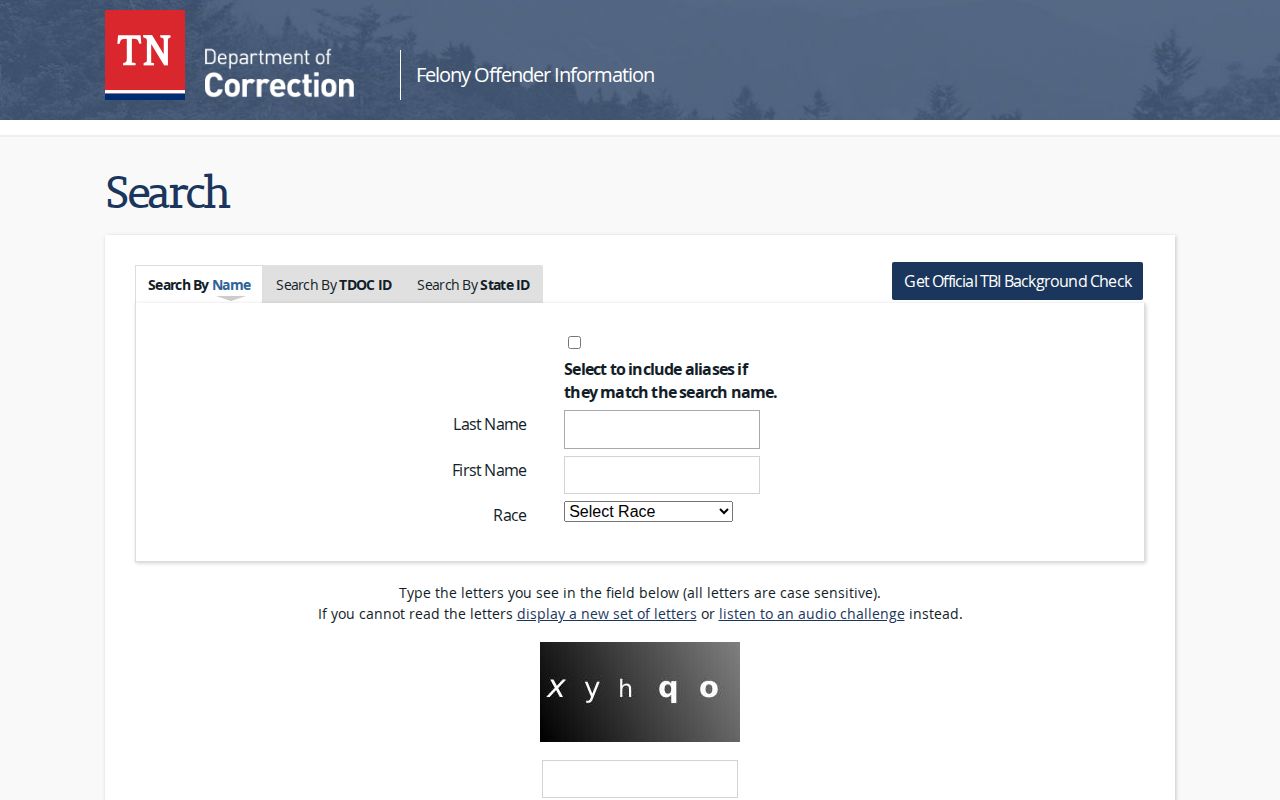
The identifier options help avoid assigning one person’s sentence dates to another person with a similar name.
Note: Save the source and query date because FOIL warns that public data may not always be timely, accurate, or complete.
Hamblen FOIL Date Labels Differ
Tennessee FOIL does not publish a field labeled “Projected Release Date” or “Tentative Release Date.” The two relevant labels are Release Eligibility Date, often shortened to RED, and Sentence End Date. RED is the earliest statutory consideration or eligibility point under the sentence regime. It is not an appointment to leave. Tenn. Code Ann. § 40-35-503 makes eligibility a basis for Board consideration rather than an automatic departure.
Sentence End Date is also not a promise of physical release on that day. Parole or mandatory reentry supervision may start earlier. A detainer can cause transfer when TDOC custody ends. Credits may change eligibility without moving expiration under some statutes. FOIL can also show Supervision Status, Assigned Location, Parole Hearing Date, Parole Hearing Result, and active Tennessee sentences. Those fields should be read together.
Rules applying to qualifying offenses committed on or after July 1, 2024 sharpen the split. Tenn. Code Ann. § 40-35-501(ff) allows certain credits to affect the percentage served before eligibility while leaving sentence expiration unchanged. This is the local page’s distinctive calculation point: collapsing RED and Sentence End Date into one homemade date can produce a result that Tennessee itself does not publish.
A FOIL detail screen shows the exact sentence date labels used by TDOC.
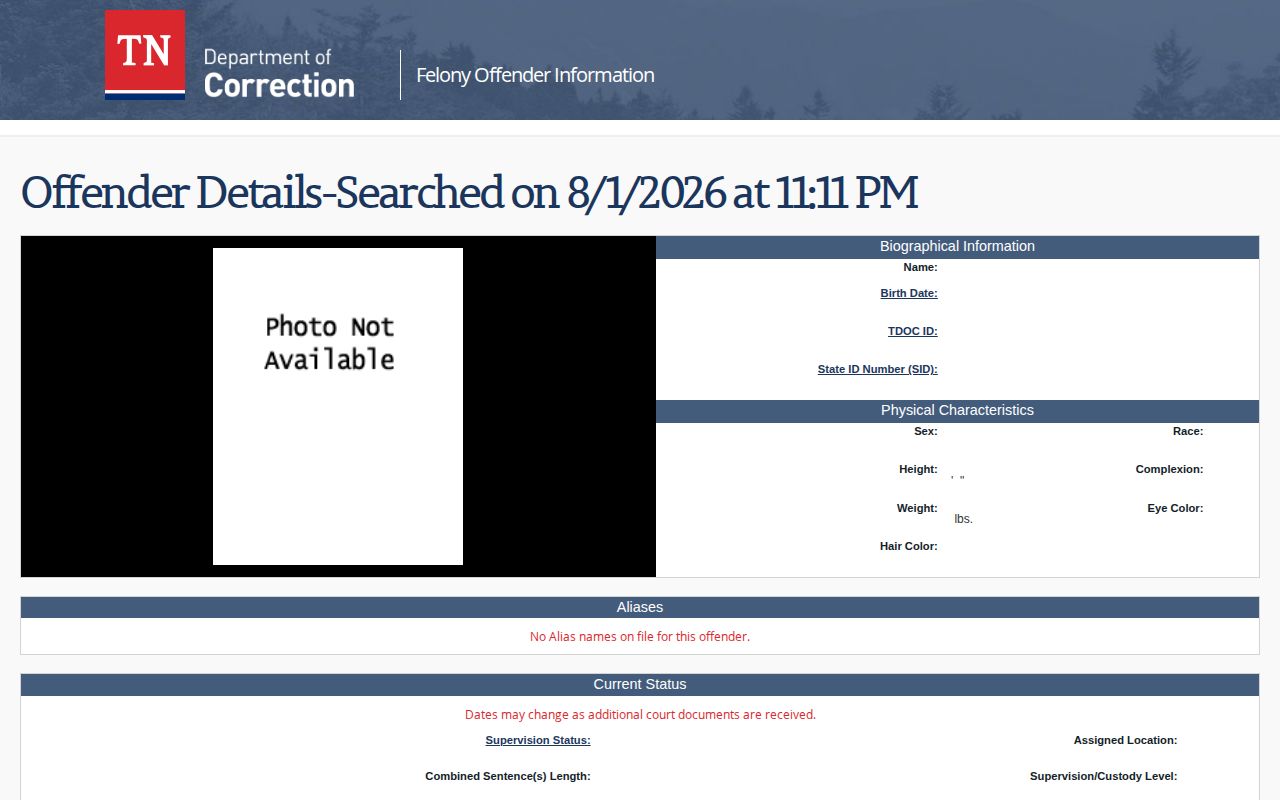
The separate fields make clear why eligibility, expiration, and actual release require distinct evidence.
Hamblen Sentence Credits and Release
Tenn. Code Ann. § 41-21-236 governs Tennessee sentence credits earned and retained through conduct and programs, along with loss, restoration, and limits. TDOC policy 505.01 administers sentence credits, but the statute and the offense-specific sentencing regime control eligibility. Credits are not a flat discount that can be applied to every sentence.
Parole eligibility under Tenn. Code Ann. § 40-35-501 can involve range percentages such as 20 or 30 percent for a mitigated offender, 30 percent for Range I, 35 percent for Range II, 45 percent for Range III, and 60 percent for a career offender. Allowed credits and offense-specific exclusions can change the calculation. The exact conviction, offense date, range, consecutive or concurrent terms, and jail credit all matter.
A credit can also be lost or restored under the governing rules. Corrected jail credit, an amended judgment, or a change in how sentences run may lead TDOC to recalculate. That is why the public FOIL date should be confirmed with Sentence Information when precision is needed. The Hamblen County release record path can then confirm the actual local custody event, but it should not recalculate the TDOC sentence.
Hamblen Release 85 Percent Caution
Tennessee has no universal rule that every person serves 85 percent. Section 40-35-501(y) applies an 85-percent baseline to listed firearm offenses in defined offense-date periods. For listed offenses from July 1, 2021 through June 30, 2024, the statute sets the eligibility framework and a floor. For listed offenses on or after July 1, 2024, credits can affect eligibility within the subsection’s limit while leaving sentence expiration unchanged.
Other parts of § 40-35-501 establish several 100-percent regimes for enumerated crimes and offense dates. The lists are not interchangeable. Some credits affect classification or privileges only. Another defined group can use qualifying program credits to reduce parole eligibility by no more than the statute allows while expiration stays fixed. An everyday offense description is not enough to decide which subsection applies.
No homemade calculation: Use the exact conviction, offense date, judgment, credit record, and TDOC calculation before describing an 85-percent or 100-percent sentence.
Note: A parole eligibility percentage determines when review may occur; it does not predict the Board’s decision or physical departure.
Why Hamblen Release Dates Change
A displayed date can change when TDOC or the court receives new legal or custody information. Some factors alter eligibility, some alter sentence expiration, and others alter only what happens at the custody boundary. A detainer, for example, can leave the TDOC calculation intact while causing the person to transfer instead of return to the community.
| Factor | Possible effect | Best confirmation |
|---|---|---|
| Earned, lost, or restored credits | May change eligibility under the applicable statute | TDOC Sentence Information and credit record |
| Corrected jail credit | Can change the sentence calculation | Judgment, jail-credit entry, and TDOC calculation |
| Amended court order | May alter length, alignment, or release authority | Certified court order |
| Concurrent or consecutive terms | Changes how multiple sentences combine | Judgments and active sentence details |
| Parole decision and plan | Can permit earlier community release but is not self-executing | Board decision and TDOC release authorization |
| Detainer, hold, or new case | May cause continued custody or transfer | Release packet and receiving authority |
Disciplinary events, conviction class, statutory regime, and plan approval can also matter. No single public field captures every moving part. Use the official calculation rather than predicting the date from a sentence length alone.
Confirm Hamblen Actual Release Dates
For a county release, HCSO’s rolling iSOMS views can show a populated release date and time on a booking card. That confirms the booking ended, but not why or where the person went. The discharge record can state the time, conditions, release authority, warrants or detainers checked, and any receiving officer. The Hamblen court file supplies the judgment, dismissal, bond order, probation order, amended order, and jail-credit entries behind the custody result.
For a TDOC case, confirm the public FOIL fields through Sentence Information or an archived records request. State-prison requests use Offender Information and Sentence Information. A felony offender housed in county jail has a separate County Jail Sentence Information route. Fax requests may be sent to 615-259-3783 with a mailing address, and the response is mailed. Archived requests go to TDOC Records Management in Nashville; archive-search charges may apply, and TDOC says not to prepay before it sends notice.
The Tennessee Public Records Act, including Tenn. Code Ann. § 10-7-503, provides access to open government records for Tennessee citizens subject to legal exceptions. Ask for an existing sentence calculation, judgment, release authorization, or discharge record. A custodian does not have to create a new projection or compile a date that the agency does not keep. Medical, sealed, expunged, security-sensitive, and other protected details can also be withheld or redacted.
A pending custody-change alert can be registered through the VINELink Inmate Search when the source participates. Treat the alert as notice to verify, not as the official calculation or discharge record. If the person is pretrial, return to the court and jail. If the case is state-sentenced, use TDOC. If it is federal, use the federal record system. That division prevents a technically correct date from the wrong custodian from being mistaken for the person’s final release.